
REITs vs direct commercial property ownership opens a fascinating discussion on two prominent methods of real estate investment. Each option presents unique opportunities and challenges, making it essential for investors to grasp the core differences and benefits associated with them. This exploration will guide you through the nuances of these investment routes, helping you make informed decisions based on your financial goals and market conditions.
By delving into the fundamental differences, financial implications, and strategic considerations, we aim to equip you with the knowledge needed to navigate this complex landscape. Whether you’re drawn to the liquidity and diversified nature of REITs or the tangible asset control of direct property ownership, understanding these choices will empower you to align them with your investment strategy.
Understanding REITs and Direct Commercial Property Ownership
Investing in real estate can be approached through various avenues, with Real Estate Investment Trusts (REITs) and direct commercial property ownership being two of the most prominent methods. Each approach comes with its own set of characteristics, benefits, and challenges that can significantly influence an investor’s decision.REITs are companies that own, operate, or finance real estate that produces income, allowing individuals to invest in large-scale, income-producing real estate without having to buy the properties themselves.
On the other hand, direct commercial property ownership involves purchasing physical real estate assets directly, allowing for personal management and control over the property. Understanding the distinctions between these two investment formats is essential for making informed decisions in the real estate market.
Fundamental Differences Between REITs and Direct Ownership
The key differences between REITs and direct commercial property ownership revolve around investment structure, management, liquidity, and risk exposure.
- Investment Structure:
REITs pool funds from multiple investors to purchase and manage real estate assets, while direct ownership involves a single investor acquiring a property outright.
- Management:
REITs are managed by professionals, relieving investors of daily operational responsibilities. In contrast, direct property owners must handle management duties, including maintenance and tenant relations.
- Liquidity:
Investing in REITs is more liquid since they can be bought and sold on stock exchanges, whereas direct ownership typically involves significant transaction costs and time-consuming sales processes.
- Risk Exposure:
REIT investors are exposed to market fluctuations and the overall performance of the real estate sector, while direct owners face property-specific risks, including vacancy and maintenance issues.
Advantages and Disadvantages of Each Method
Both investment methods offer distinct advantages and disadvantages that can cater to different investor profiles and objectives.
- Advantages of REITs:
- Accessibility: Lower barrier to entry compared to direct property ownership, allowing smaller investments.
- Diversification: Investors can gain exposure to various real estate sectors.
- Passive Income: REITs typically pay dividends, providing a steady income stream without active management.
- Disadvantages of REITs:
- Less Control: Investors have no say in property management decisions.
- Market Dependency: Share prices can be affected by broader market conditions.
- Fees: Management fees can erode returns over time.
- Advantages of Direct Ownership:
- Control: Owners can make decisions regarding property management and improvements.
- Tax Benefits: Direct ownership can provide tax advantages, such as depreciation and mortgage interest deductions.
- Potential for Appreciation: Direct owners can benefit directly from property value increases.
- Disadvantages of Direct Ownership:
- Illiquidity: Selling a property can take time and is often costly.
- High Initial Investment: Requires significant capital to purchase a property.
- Active Management Required: Owners must deal with tenant issues, maintenance, and repairs.
Examples of Successful REITs and Notable Cases of Direct Property Ownership
Several REITs have achieved remarkable success, illustrating their viability as an investment option. For instance, Public Storage is a leading REIT specializing in self-storage facilities, with a robust portfolio that has consistently delivered dividends to investors. Another example is Prologis, which focuses on logistics real estate and has benefitted from the increase in e-commerce, resulting in significant market growth.On the other hand, notable cases of successful direct property ownership include The Blackstone Group, which has made substantial profits from its direct commercial real estate investments, particularly in office spaces and retail properties.
Local investors, such as small business owners who own their storefronts, also represent a successful case of direct ownership, as they often benefit from increased property values while operating their businesses.By understanding the fundamental differences, advantages, and disadvantages of REITs versus direct commercial property ownership, investors can better navigate the complexities of real estate investing and choose the path that aligns with their financial goals.
Financial Aspects of REITs vs Direct Ownership
When considering investments in real estate, one of the key factors to evaluate is the financial implications of each option. Real Estate Investment Trusts (REITs) and direct ownership of commercial properties each come with their unique financial opportunities and challenges. Understanding these financial aspects is crucial in making informed decisions that align with your investment goals.
Expected Financial Returns
Investing in REITs typically offers different financial returns compared to direct commercial property ownership. With REITs, investors generally benefit from the ability to diversify their portfolios easily, as these trusts invest in a range of properties across various sectors. REITs often provide attractive dividend yields, which can be appealing for investors seeking income. For instance, the average dividend yield for REITs has historically ranged from 4% to 6%, depending on the specific trust and market conditions.
Investors enjoy liquidity as they can buy and sell shares on stock exchanges, which can lead to quicker returns on investments compared to the longer timeline often associated with direct property sales.Conversely, direct ownership of commercial properties can yield higher potential returns over time, especially if the property appreciates significantly or if the investor successfully improves the property’s value. Direct ownership also offers the possibility of cash flow through rent, which can be raised over time as market conditions improve.
However, the potential returns may be offset by market downturns or property vacancies.
Tax Implications
The tax implications of investing in REITs as opposed to direct property ownership are markedly different and can influence overall returns. For REITs, one notable advantage is that they are required to distribute at least 90% of their taxable income as dividends to shareholders. This tax structure allows investors to benefit from pass-through taxation, meaning that the REIT itself does not pay corporate taxes, potentially resulting in lower tax burdens for some investors.
However, the dividends received can be taxed as ordinary income, which might be higher than capital gains tax rates.On the other hand, direct commercial property ownership allows investors to benefit from tax deductions related to mortgage interest, property depreciation, and operating expenses. When selling the property, investors can also benefit from capital gains tax rates, which are typically lower than ordinary income tax rates, provided they meet the holding period requirements.
It’s essential to consider both the immediate and long-term tax implications of each investment type, as they can significantly affect net returns.
Cost Considerations
Investing in either REITs or direct commercial property involves various costs that should be meticulously assessed. Below are some of the key expenses associated with each investment type.The costs associated with REITs are generally lower than those of direct ownership. Investors incur management fees, which can range from 0.5% to 2% of assets under management, depending on the REIT’s structure and performance.
Additionally, since REITs trade on public exchanges, transaction costs are typically limited to brokerage fees, which are relatively minor.In contrast, direct commercial property ownership incurs several costs that can add up quickly. These may include:
- Management Fees: Property management companies charge fees that can range from 5% to 10% of the rental income, depending on the services provided.
- Maintenance Costs: Owners must budget for ongoing maintenance, repairs, and improvements to the property, which can be unpredictable but are crucial for retaining tenant satisfaction and property value.
- Transaction Costs: Buying or selling properties involves substantial transaction costs, including closing costs, legal fees, and possibly real estate agent commissions, which can total 5% to 10% of the property value.
- Property Taxes: Owners are responsible for property taxes, which vary by location and can significantly impact profitability.
Understanding these costs helps in determining the overall feasibility and profitability of each investment type. By carefully evaluating both the potential returns and the associated costs, investors can make more informed decisions aligned with their financial objectives.
Strategic Considerations for Investors
Investing in real estate can take multiple forms, with Real Estate Investment Trusts (REITs) and direct commercial property ownership being two prominent options. Each avenue has unique advantages and is suited for different investor profiles. Understanding these distinctions is crucial for making informed investment decisions that align with individual financial goals and market conditions.
Investor Profiles for REITs and Direct Commercial Property Ownership
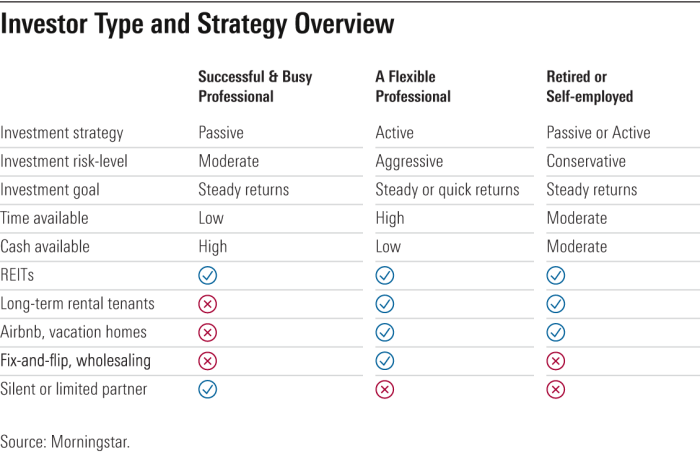
Different types of investors may find one option more appealing than the other based on their financial goals, risk tolerance, and investment strategy. Below are the ideal investor profiles for each option:
- REITs: Ideal for investors seeking liquidity and diversification without the need for direct property management. These are often individuals with limited capital who prefer passive income and the ability to easily buy and sell shares.
- Direct Commercial Property Ownership: Best suited for investors looking for a long-term commitment and direct control over their assets. Typically, these investors have significant capital and a willingness to manage properties, catering to those who enjoy hands-on involvement in their investments.
Factors Influencing Investment Decisions
Multiple factors play a role in determining whether an investor should choose REITs or direct commercial property ownership. Key considerations include:
- Market Conditions: Investors should assess the current real estate market trends. In a booming market, direct property ownership can yield substantial returns. Conversely, in a downturn, REITs may provide a safer investment with less exposure to market volatility.
- Investment Goals: Understanding specific financial objectives is critical. Investors focused on immediate cash flow may prefer REITs, which provide dividends. In contrast, those aiming for long-term capital appreciation might find direct ownership more beneficial.
- Risk Tolerance: REITs tend to have lower risks associated with property management but expose investors to stock market fluctuations. Direct ownership carries operational risks but offers potentially higher returns and more control over investment outcomes.
The Role of Real Estate Agents and Realtors
Real estate professionals play a vital role in guiding investors through the complexities of both REITs and direct property ownership. Their expertise can significantly influence investment decisions. Here’s how they assist investors:
- Market Insights: Realtors provide valuable information about local market conditions, helping investors to make informed decisions based on current trends and forecasts.
- Property Evaluation: For those considering direct ownership, real estate agents help in assessing the value and condition of potential properties, ensuring investors make sound purchases.
- REIT Selection: For investors leaning towards REITs, agents can offer insights into the best-performing REITs based on historical performance, sector focus, and management quality.
- Negotiation Expertise: Realtors facilitate negotiations for direct property transactions, ensuring that investors achieve favorable terms, which is critical in securing profitable investments.
Ending Remarks
In conclusion, both REITs and direct commercial property ownership offer distinct advantages and potential pitfalls that cater to different investor profiles. By weighing the financial aspects and strategic considerations discussed, you can confidently determine which investment path aligns with your objectives. Ultimately, understanding the nuances of these two options will enable you to make smarter, more strategic choices in your real estate endeavors, whether it’s through a hands-on approach or a more passive investment strategy.
User Queries
What are REITs?
REITs, or Real Estate Investment Trusts, are companies that own, operate, or finance income-generating real estate, allowing investors to buy shares and earn income without direct property ownership.
What are the main advantages of investing in REITs?
REITs provide liquidity, diversification, and the potential for regular income through dividends, making them an attractive option for many investors.
What are the risks associated with direct commercial property ownership?
Direct ownership entails responsibilities such as property management, maintenance, and market fluctuations, which can affect investment returns and require significant capital.
How do tax implications differ between REITs and direct property ownership?
Investments in REITs typically come with favorable tax treatment on dividends, while direct property ownership may allow for deductions on expenses and depreciation, impacting overall tax liability.
Which investment is better for beginners?
Beginners may find REITs easier to navigate due to their lower capital requirements and diversified nature, while direct ownership requires more time and knowledge to manage effectively.


