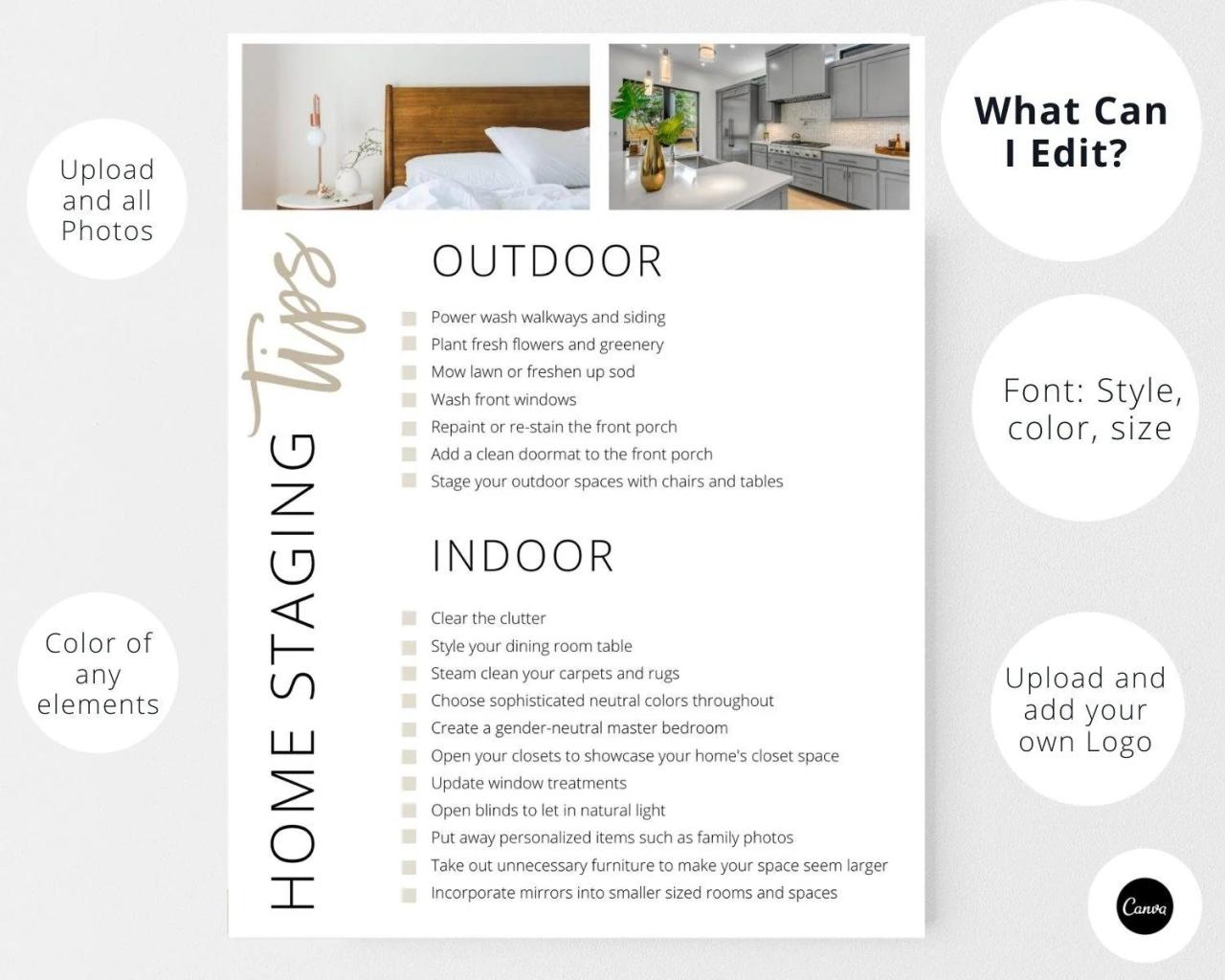
Home staging checklist for sellers is a crucial component in the real estate market that can significantly enhance a property’s appeal. It’s not just about making a space look good; it’s about creating an inviting atmosphere that allows potential buyers to envision themselves living there. Staging requires careful planning and attention to detail, ensuring that every corner of your home highlights its best features.
This checklist will guide sellers through the essential steps of preparing their homes for sale, emphasizing the importance of decluttering and depersonalizing spaces. By collaborating with real estate professionals and tailoring staging strategies to target demographics, sellers can maximize their property’s attractiveness and marketability.
Home Staging Essentials
Home staging is a crucial step in the selling process that can significantly impact the speed and price at which a home sells. By presenting a property in its best light, sellers can create an inviting atmosphere that helps potential buyers envision themselves living there. Effective home staging can lead to faster sales and potentially higher offers.The importance of home staging lies in its ability to highlight the property’s features while minimizing its flaws.
A well-staged home makes a strong first impression, which is essential in a competitive real estate market. It not only helps the home stand out in listings and during showings but also allows buyers to connect emotionally with the space.
Checklist of Items Needed for Effective Home Staging
Before staging a home, it’s essential to gather the right items that will enhance its appeal. The following checklist Artikels key elements that contribute to effective home staging:
- Neutral Color Palette: Select paint colors that appeal to a wide range of buyers, such as soft grays, beiges, or whites.
- Quality Lighting: Use a mix of overhead and task lighting to brighten up spaces and create an inviting atmosphere.
- Furniture Arrangement: Ensure furniture is arranged to facilitate flow and highlight the purpose of each room.
- Accessorizing: Incorporate tasteful decor items like throw pillows, rugs, and artwork that complement the home’s style.
- Clean and Fresh Linens: Utilize fresh towels, beddings, and table settings to add a touch of luxury.
- Outdoor Enhancements: Maintain curb appeal with well-kept landscaping, outdoor furniture, and decorative accents.
Methods for Decluttering and Depersonalizing a Home Before Staging
Decluttering and depersonalizing are essential steps in the home staging process, as they allow potential buyers to visualize themselves in the space. Here are effective methods for achieving this:First, approach decluttering with a strategic mindset. Begin by sorting through each room, focusing on common areas, kitchens, and bathrooms where clutter tends to accumulate. Utilize boxes or bins to categorize items into keep, donate, and discard piles.
This method not only simplifies the process but also makes it easier to recognize what truly belongs in the home.Next, depersonalizing the space is equally important. Remove personal photographs, unique decor items, and any memorabilia that might distract buyers. Neutralizing the decor with generic art or simple accessories can help prospective buyers to imagine their own belongings in the home.
A final touch involves organizing storage spaces. Clear out closets and cabinets to make them appear more spacious. This gives buyers the impression of ample storage, which is often a top priority.
“A clutter-free and depersonalized home allows buyers to envision their own lives in the space, making them more likely to make an offer.”
Collaborating with Real Estate Professionals

In the world of home staging, the collaboration between sellers and real estate professionals can significantly impact the outcome of the selling process. Real estate agents bring expertise and experience that can elevate a home’s presentation and marketability. By effectively teaming up with these professionals, sellers can ensure their home appeals to potential buyers, ultimately leading to quicker sales and potentially higher offers.Real estate agents play a pivotal role in the home staging process.
They serve as guides, offering insights into market trends, buyer preferences, and effective strategies for presenting a property. Their understanding of what attracts buyers can influence decisions regarding which rooms to stage, the types of furnishings to use, and the overall aesthetic that will resonate in the current market. By leveraging their knowledge, sellers can make informed decisions that align with buyer expectations.
Effective Communication with Realtors
Sellers can enhance their collaboration with real estate agents by clearly expressing their staging goals and expectations. Open lines of communication can lead to a more tailored staging approach that aligns with the home’s strengths and the seller’s vision. Here are some key strategies for effective communication:
- Share personal insights about the home, such as its unique features, history, or upgrades that may appeal to buyers.
- Discuss the target demographic for potential buyers to help the realtor tailor the staging to suit specific tastes and lifestyles.
- Set clear objectives regarding the desired timeline for staging and selling, ensuring that all parties are on the same page.
- Be open to the realtor’s professional advice, as their experience can provide valuable perspectives on what works best in the current market.
Influence of Staging on Marketing Strategies
The staging of a home can significantly influence how a realtor approaches marketing efforts. A well-staged home not only enhances visual appeal but also creates an emotional connection with buyers, making it more memorable. Here’s how staging impacts a realtor’s marketing strategy:
- High-quality photos: Staged homes tend to photograph better, leading to more visually appealing listings that attract attention online.
- Enhanced storytelling: Staging allows realtors to create a narrative around the home, highlighting its best features and potential lifestyle benefits.
- Targeted advertising: Realtors can utilize insights from the staging process to tailor marketing materials, focusing on specific buyer demographics that are likely to be interested in the property.
- Open house effectiveness: Staged homes create a welcoming environment during showings, encouraging potential buyers to envision themselves living in the space.
“A well-staged home is not just about aesthetics; it’s a strategic marketing tool that can elevate a property’s appeal and drive buyer interest.”
Targeted Home Staging Strategies
Staging a home involves more than just a fresh coat of paint and decluttering; it requires a targeted approach tailored to the unique aspects of different properties and their potential buyers. Understanding the nuances of various property types and buyer demographics can significantly enhance the effectiveness of your staging efforts. When planning to stage a property, it’s essential to consider its type—whether it’s a condominium, a single-family home, or even a commercial space.
Each type comes with its own characteristics, potential buyer needs, and staging strategies that can optimize appeal and marketability.
Staging Strategies for Different Property Types
Each type of property requires a distinct approach to staging. Here are some tailored strategies for staging condominiums and single-family homes:
- Condominiums: Focus on maximizing space and showcasing amenities. Use lighter colors to enhance brightness and employ minimal but impactful decor. Highlight communal features, such as gym or pool areas, in marketing materials.
- Single-Family Homes: Emphasize the lifestyle benefits of the property. Create inviting outdoor spaces, and ensure that each room showcases its function clearly, from a cozy reading nook to a family-friendly dining area.
Staging for Various Buyer Demographics
Different buyer demographics have distinct tastes and lifestyle preferences. Staging should reflect these differences to resonate with potential buyers effectively.
- Young Professionals: Aim for a modern style with sleek furnishings and smart technology features. Showcase local hotspots and lifestyle conveniences in the marketing.
- Families: Highlight safety, space, and functionality. Create a warm and welcoming environment that includes family-friendly areas like playrooms or spacious backyards.
- Retirees: Use a style that emphasizes comfort and accessibility. Consider staging rooms with minimal obstacles and showcasing community features like nearby parks or recreational activities.
Comparison of Staging Techniques for Residential vs. Commercial Properties
Staging strategies for residential properties differ significantly from those used in commercial settings. Understanding these differences can enhance the effectiveness of your staging efforts.
- Residential Properties: Focus on creating a home-like atmosphere that allows potential buyers to envision their lives in the space. This includes personal touches, neutral colors, and inviting decor.
- Commercial Properties: Highlight functionality, branding opportunities, and space utilization. Use staging to demonstrate how the space can be adapted to various business needs, such as retail or office layouts.
Effective home staging is about creating an emotional connection between the buyer and the property, tailored to its unique attributes and target audience.
Final Wrap-Up
In conclusion, understanding the home staging checklist for sellers is fundamental for anyone looking to sell their property effectively. By following these guidelines, sellers can create a welcoming environment that resonates with potential buyers, making their homes stand out in a competitive market. A well-staged home not only enhances first impressions but also contributes significantly to achieving favorable sale outcomes.
Detailed FAQs
What is home staging?
Home staging is the process of preparing a home for sale by optimizing its appearance to attract potential buyers.
How much does home staging cost?
The cost of home staging can vary widely, ranging from a few hundred to several thousand dollars, depending on the size of the home and the level of staging required.
Can I stage my home myself?
Yes, many sellers choose to stage their homes themselves by decluttering, depersonalizing, and rearranging furniture, although hiring a professional can yield better results.
How long does home staging take?
The time required for home staging can vary based on the home’s size and the extent of changes needed, but it typically takes a few days to a week.
Does home staging really help sell a house faster?
Yes, homes that are staged often sell faster and at a higher price compared to unstaged homes, as they create a more appealing visual experience for buyers.


